Teething and Essential Oils: A Gentle, Cautious Guide
Wondering about essential oils for teething pain relief, baby safe options? A mom shares what we actually do for comfort, the oils we choose, and what we
By the LittleSynergy Team — moms, Wellness Advocates & doTERRA enthusiasts
If you are reading this while swaying a fussy, drooly baby on your hip, we see you. We know how desperately you want to offer comfort. The question many of us land on is whether there are essential oils for teething pain relief that can be a gentle part of the routine. The direct, honest answer is that applying essential oils directly to a teething baby’s gums is never something we recommend or practice. The mucosa is too sensitive, and it is simply not the right application. Instead, what we find helpful is using perfectly diluted, soothing oils along the jawline or diffused in the room to create a calmer atmosphere, always after checking with our pediatrician. This is not about treating pain but about surrounding your little one with a sense of comfort and calm.
A Mom’s Reality Check on Safety
Before you even open a bottle, the most important step is a conversation with your child’s pediatrician. What works for one family may not be right for yours, and your doctor knows your baby’s history best. Our internal rule is simple: we never apply any essential oil, no matter how gentle, to a baby’s skin without first generously diluting it in a carrier oil, and we keep everything stored well out of reach. Also, please remember that some oils we use for ourselves are not friends to the very young. This is a firm rule in our home, and we would gently encourage it in yours, too.
| Oils Around Babies & Children | Our Gentle Go-Tos | We Keep These Away |
|---|---|---|
| Our Approach | Diffused in shared spaces or applied to our skin after dilution, far from baby’s hands and face. | Not used around newborns and infants, and never on their skin. |
| Examples | Lavender, Roman Chamomile | Peppermint, Eucalyptus, Rosemary, Wintergreen |
A Gentle Routine, Not a Treatment
When the tears start, we focus on what we can do to shift the energy in the room. This is the comforting ritual we turn to, with our pediatrician’s approval.
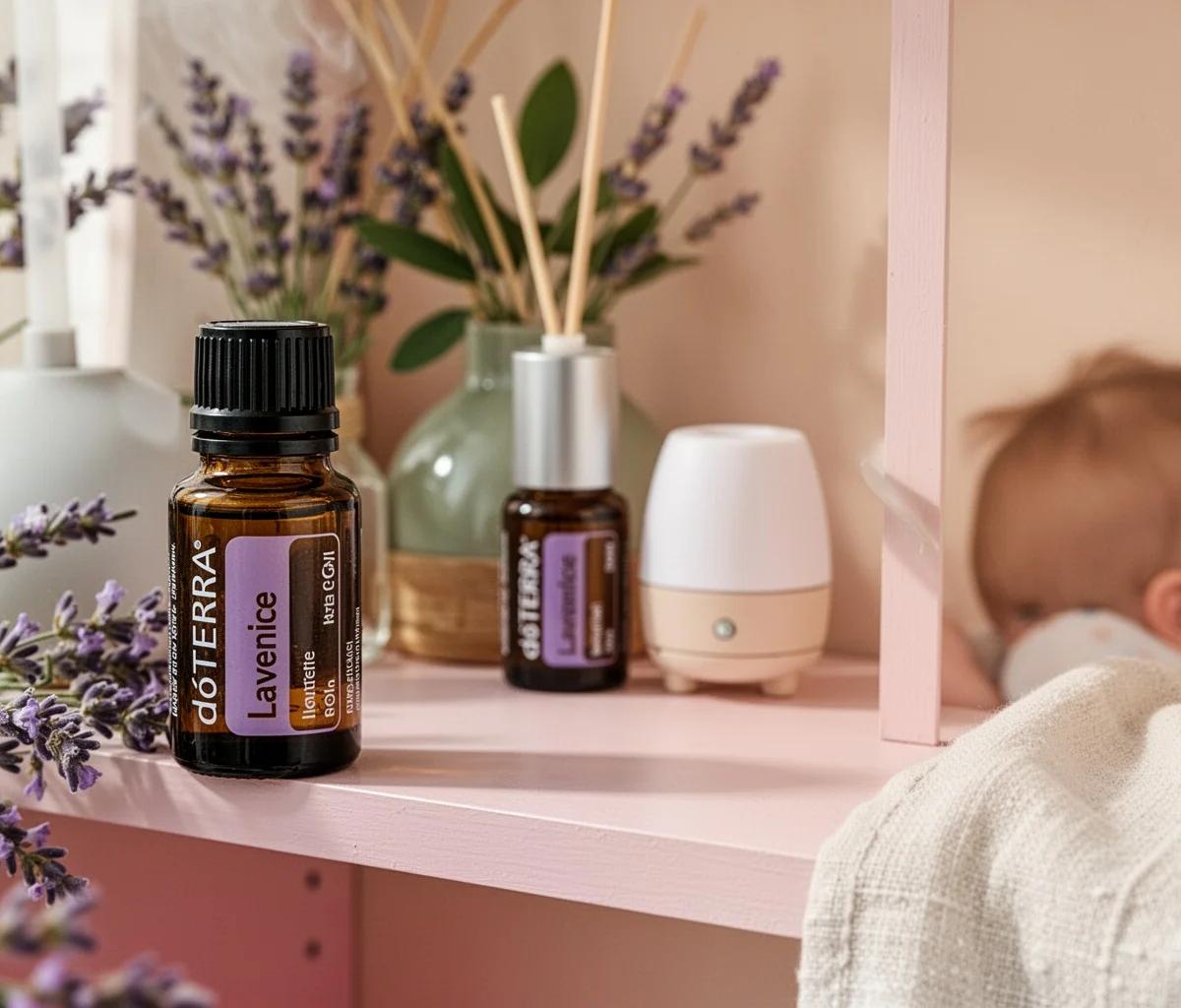
- Set the mood. We fill a diffuser in the family living space with water and just 1-2 drops of Lavender. The quiet hum and soft aroma are for everyone’s benefit, not just the baby’s.
- Focus on mom’s comfort. I will dilute a single drop of Roman Chamomile with a generous amount of fractionated coconut oil and rub it on the back of my own neck. When I am calmer, my baby feels calmer. This is for me, and it’s applied where the baby cannot accidentally touch or mouth it.
- Offer all the other comforts. The essential oil is only one tiny piece. We always pair it with the real workhorses: a cold, wet washcloth to gum on, extra snuggles in the rocking chair, and singing a silly, off-key lullaby.
Related reading
- Essential Oils and Teething Babies, What Parents Should Know
- Essential Oils and Baby Colic Relief
- Gentle Oil Help for Baby Diaper Rash
Frequently Asked Questions
Can I put lavender oil directly on my baby’s gums for teething? No, we never do this. The skin in the mouth is much too sensitive for undiluted essential oils, and a baby could easily swallow it. This is a firm no in our book.
Is it safe to diffuse oils in my baby’s nursery all night? We do not recommend diffusing in the baby’s bedroom while they are sleeping unattended, and we never do it all night. Short periods of diffusion in a shared living space while you are present and watching are a much safer starting point to talk about with your pediatrician.
What oil is best for a teething baby’s pain? We don’t view any oil as a treatment for teething pain. For creating a comforting sense of calm and relaxation in the home, many parents turn to gentle florals like Lavender or Roman Chamomile, but this is for the atmosphere, not for pain relief.
Why should I avoid using peppermint oil around my baby? Peppermint is a high-menthol oil that can be too intense for a baby’s sensitive respiratory system. We simply keep it and similar oils out of any room a baby is in and never apply them to their skin.
Where should I apply diluted chamomile oil for a teething baby? If your pediatrician gives you the green light to use a highly diluted drop, the application is always external, rubbed gently along the outside of the jawline, never inside the mouth or on the gums, and only for babies who are no longer the very youngest infants.
If the pain seems intense or your gut tells you something else is wrong, we step away from the oils and call the pediatrician. A cold washcloth, a gentle distraction, and a call to the doctor are often the most powerful tools we have. This content is for general information only and is not medical advice. Essential oils are not intended to diagnose, treat, cure, or prevent any disease; always consult a pediatrician before any use involving babies or children.