Safe Essential Oils for Pregnancy Nausea Relief
Wondering which essential oils may ease first trimester nausea? A practical, cautious mom-to-mom guide to gentle aromas and what to ask your doctor.
Safe Essential Oils for Pregnancy Nausea Relief
By the LittleSynergy Team — moms, Wellness Advocates & doTERRA enthusiasts
If you're reading this while clutching a sleeve of crackers and praying the room stops tilting, we see you. That queasy, all-day fog of the first trimester is exhausting, and you're probably wondering if there's anything gentle you can do beyond nibbling toast and sipping ginger ale. The short answer is that some moms find light, occasional use of certain pure essential oils helps create a calmer environment when nausea hits, but the safest first step is always a conversation with your doctor or midwife. Oils are never a replacement for prenatal care or medication your provider recommends. What follows is how we think about it as cautious, experienced moms, not medical advice.
Start With Your Doctor, Then Choose Calmly
Before you unscrew a single cap, pause. Pregnancy changes how your body responds to everything, including scents. What smelled lovely last month might trigger a wave of nausea this week. Your provider knows your history and your trimester, and they are the right person to approve any oil you're considering. That said, many moms find that keeping the air fresh and gently scented beats any heavy, lingering perfume. The goal is relief from nausea, not a fragrant cloud. Less is more, especially in the first trimester.
Oils Many Moms Reach For
When we talk with expectant moms in our community, a few doTERRA oils come up again and again as gentle, fresh options worth asking about. None of these are applied to skin for nausea; they are used in a diffuser or inhaled briefly from a tissue.
| Oil | Why Moms Reach For It | How It's Often Used |
|---|---|---|
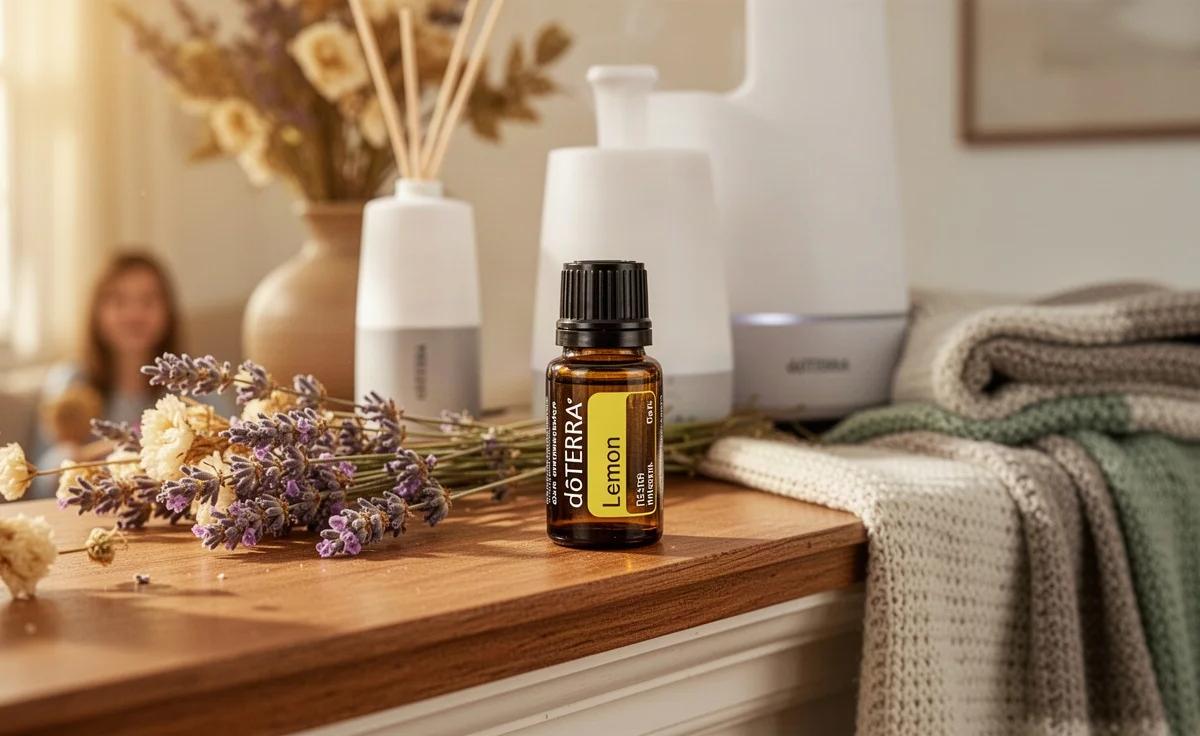
| Lemon | Bright, clean, familiar | 1-2 drops on a tissue, short inhale |
| Ginger | Warm, grounding, classic kitchen scent | Diffused briefly in an aired room |
| Peppermint | Cool, sharp, often cuts through queasiness | Inhaled from a tissue only, never diffused around babies |
Peppermint deserves a careful note: while some pregnant women find its cool sharpness briefly helpful, it is a high-menthol oil and is best kept away from the very young. Ask your provider before using it, and never diffuse it in a room where an infant or toddler sleeps or plays. For a deeper look at first trimester options, see our guide on gentle essential oils for the first trimester.
A Gentle Routine, Step by Step
If your provider gives you the green light, here is how to keep things simple and safe:
- Pick one oil at a time. Don't blend anything yet.
- Put a single drop on a cotton ball or tissue.
- Hold it a few inches from your nose and take one slow breath.
- Wait ten minutes. Notice how you feel.
- If it helps without overwhelming you, keep the tissue nearby. If not, seal the bottle and step away.
What We Recommend Most Often
In our experience, the moms who feel most comfortable are the ones who treat oils as a supplement to rest, hydration, and their provider's plan, never a substitute. A drop of Lemon on a tissue by the sink can make breathing through a queasy moment a little easier. That is the whole point: small, gentle support.
Common Mistakes That Make Nausea Worse
We hear from moms who tried oils for nausea and gave up because it " made everything worse" — and nine times out of ten, one of these slips was the culprit. The biggest is over-diffusing. Running a diffuser for hours in a closed bedroom saturates the air until even a mild oil becomes suffocating, and a first-trimester nose will rebel. Another frequent mistake is sniffing the bottle directly. That concentrated blast can trigger the exact gag reflex you're trying to calm. Finally, layering scents — a lemon diffuser in the kitchen, a scented lotion on your hands, a peppermint tissue in your pocket — creates a muddled cloud that overwhelms rather than soothes. Stick to one scent at a time, low and brief.
When Nausea Strikes at Work or in the Car
You won't always be near your diffuser when a wave hits, so a tiny portable kit helps. Moms in our community pack a small zippered pouch with two cotton balls pre-dotted with one drop of Lemon or Ginger (each in its own sealed baggie to avoid cross-scenting), a few plain tissues, and a pack of bland crackers. When nausea flares in traffic or at a desk, they open the baggie, hold it a few inches away, and take one slow breath. The cracker gives your stomach something to do, the scent interrupts the spiral, and the sealed baggie keeps the smell from leaking into your purse. Swap out the cotton balls every morning so the oil is fresh, and never apply oil to your skin in a moving car where you can't wash it off if it suddenly feels wrong.
Frequently Asked Questions
Is peppermint oil safe in the first trimester?
It depends on your provider's guidance. Peppermint is a high-menthol oil, and many cautious moms avoid it during early pregnancy or use it only briefly on a tissue, never on skin.
Can I apply essential oils to my skin for nausea?
For nausea, most moms prefer inhalation over skin application. If you consider skin use for any reason, ask your doctor or midwife first, and never apply undiluted oils.
How many drops should I use in a diffuser?
If your provider approves, 3 drops per 100 ml of water for 30 minutes in an aired room is a common cautious approach. Less is always better in early pregnancy.
Are citrus oils safe during pregnancy?
Lemon is generally considered a gentle option by many providers. However, some citrus oils can make skin more sensitive to sunlight, so they belong in a diffuser or on a tissue, not on sun-exposed skin.
Should I stop using oils if the smell makes me nauseous?
Yes. Pregnancy changes scent preferences quickly. If any oil makes you feel worse, step away from it and let your provider know.
A Few Closing Thoughts
First trimester nausea is hard, and you deserve patience, rest, and honest guidance. Essential oils can be a small, pleasant part of your toolkit when used cautiously and with your provider's blessing. Trust your nose, trust your doctor, and be gentle with yourself.
This content is for general information only and is not medical advice. Essential oils are not intended to diagnose, treat, cure, or prevent any disease; always consult a pediatrician before any use involving babies or children.